Saturday, December 29, 2007

My Favorite News Sources

I admit it: I'm addicted to news. I don't know when I first became interested in news. I edited a high school paper and a college paper. I've written for rural weekly papers and worked a beat for a daily for awhile. I enjoy news, and news analysis...

While this list is by no means exhaustive, here are some of the news sources that I visit more or less weekly:

  • Yahoo! News - this is more like a portal than a source. Yahoo provides links to wire service information and major newspapers, organized topically and searchable. If you want to read about politics, there's a page on politics. If you want to read about Asia, there's a page on Asia. If you want to read about science news, there's a page. You get the idea. Search by a person's name and you get a list of news articles about the person. I visit this site daily...

  • USA Today - I browse the paper once or twice a week.
  • The Washington Post - a good source for politics and for world news.
  • National Public Radio - A unique perspective on national and international news. NPR has the advantage of allowing me to listen to news on the drive to and from work, time that might otherwise be wasted...
  • The Bluefield Daily Telegraph - I wrote for them, long ago. This is the closest thing we have to a daily paper for Tazewell County. Their coverage is focused more on West Virginia, but we get their crumbs, as coverage goes.
  • The Charleston Gazette - since I work in West Virginia...
  • The Richmond Times-Dispatch - a good source of Virginia news.

Having spent a third or so of my adult life outside the Continental US, I like to read a few international papers, as well...

Tuesday, December 25, 2007

Friends in Finland...

I've been to Andorra, Australia, Austria, Belgium, Canada, Denmark, Edisto Beach, the Federated States of Micronesia, France, Germany, Gormania, Guam, Hawaii, India, Indonesia, Italy, Japan, Kapingamarangi, Liechtenstein, Luxembourg, Malaysia, Majuro, Myanmar (maybe, hard to tell), Myrtle Beach, Nepal, the Netherlands, New Zealand, The Northern Mariana Islands, Orchard Road, Pawleys Island, the Philippines, Pigeon Forge, Puerto Rico, Boat Quay in Singapore, Rattanakosin (Old Bangkok), Singapore, Spain, Switzerland, Texas, Thailand, Union Grove in North Carolina, the Virgin Islands, Wagga Wagga, Yellowstone, and several zoos. But not to Finland...

I have friends in Finland. When I lived in Canberra, Australia, the city there had a small but vibrant community of Finns. Youth With A Mission (whom I worked for there) had a steady flow of Finnish students coming through its training programs. I've lost touch now with all of them. But occasionally I see their faces in my mind and think about our old friendships.

One family in particular used to invite me to their home in Canberra.
They had a sauna they'd built themselves. (They pronounced that word as "SAU-nah," and the "sau" rhymed with "cow.") I could sit in the sauna with them. It would climb into the 80's, which is about 175F degrees. I could stand that; it was almost pleasant. But then one of them would throw a thimble or so or water on the hot rocks and steam would fill the room. I would have to exit the sauna. I could hear them chuckle as I went through the door.

I also remember drinking small quantities of a marvelous liquid with them. It was clear and tasted like berries - berries that were on fire. And if you drank enough of it the liquid made you want to sing. Can't remember what they called it, though.

I had the pleasure of doing a small amount of language work with one Finnish man for one of my linguistic classes at the ANU. Finnish is a beautiful and intriguing language, from what I remember.

Maybe one day I'll get to visit Finland...

Monday, December 24, 2007

Response to Intervention - A New Model for Identifying Disabilities

Note: Visit my education blog, The Green Cup.

When the regulations for IDEA 2004 became official not long ago, a new model came to town for identifying students as having a specific learning disability. It's called response to intervention, and is abbreviated as RTI or RtI.

To understand RtI and its implications fully you need to understand the previous model for deciding whether or not a child had a learning disability. That model, called the discrepancy model, compares IQ (on something like the WISC-IV) and achievement (usually measured with something like the WIAT) and examines the difference. The idea until now has been that if a child has the intelligence to learn at a particular level but isn't, that discrepancy between intelligence and achievement is evidence of a disability.

The problem was that it takes time, years in fact, for a discrepancy to become significant enough to be considered as a disability. In first grade there's not much to measure. And in second grade there's still not usually a big enough difference between intelligence and achievement to make the discrepancy model work.

When a teacher first suspects that a child may have a learning disability in the first or second grade, everyone felt trapped under the old discrepancy model. The child may well have had a disability, but we needed evidence of the disability in order to place the child in special education. So instead of getting help then, the child got watched more closely. It was kind of like having a rule that you can't throw a life preserver to a kid in the pool until their head goes under the third time. This year the child is just behind, next year the child will have a disability...

In contrast to the old discrepancy model, the RtI model begins looking for curricular intervention designed to catch the kid up as soon as they begin having problems - back in first or second grade. RtI has the potential then to allow disabilities to be identified and defined based on the response a child has to the interventions that are tried. At the very least, RtI can replace the pre-referal process for special education. And in theory, children with real disabilities could be identified and placed years earlier and children without disabilities won't be allowed to fall further and further behind simply to see if they have a learning disability.

The Reading First people have fleshed out the concept of RtI so that most educators today think of a detailed set of specifications when someone mentions RtI. Dallas Reading First has a website that describes the process of intervention well:

  • Students get taught good stuff in a setting known as Tier I. This is the primary (or "core") instructional setting for all students.
  • Sometimes a particular student needs more. So instruction gets supplemented with an "intervention." This is called Tier II. Students come and go in Tier II instruction for short periods of time to address specific areas where the student is falling behind or failing to "get it." Tier II usually involves 30 minutes of extra instruction a day in the content area of intervention. Usually there are no more than four or five students in a Tier II intervention session.
  • When a student doesn't seem to benefit from 30 extra minutes in Tier II they get moved on up the intervention chart and start getting an extra hour a day (usually) at Tier III. Tier III interventions tend to be more individualized and involve one-on-one time with a specialist.

The Dallas Reading First site describes an intervention plan specifically for reading. And RtI is almost always thought of as a response to reading problems at the moment; but there is no reason the model couldn't be adapted to math or other content areas.

The Dallas Reading First website illustrates almost exactly what former International Reading Association President Richard L. Allington complained about in his article Research and the Three Tier Model in April of 2006. Students in Tier II in Dallas don't get help with what they did during Tier I instruction; instead they get more and different material on reading: they didn't understand McGraw-Hill so they get time in Voyager. But as Allington points out, that's not really a problem with the three tier model itself as much as with the manner in which the model is used.

Will RtI work? I suppose the more salient question becomes who will the RtI model work for? Will it work for the people who think it takes too long under the discrepancy model to identify a child who has a learning disability? Will it work for county administrators and other groups who sometimes feel that too many children are identified as having learning disabilities? And will it work for kids who don't really have a disability but do need help?

I'll take a look at some of the pros and cons of the RtI model in the near future...

Wednesday, December 19, 2007

Another Two Hour Delay

Five a.m. the phone rings. We get the message that sleet and ice have covered some roads in our county and we are on a two hour delay for the second time this week.

The dog wants out.

I caught the coffee pot just as it started to drip and save that pot of coffee for later.

Five phone calls and back to bed and, maybe, to sleep...

Tuesday, December 18, 2007

The Week Before Christmas at School

I wrote yesterday about the two hour delay we had at school. Apart from the snow, I suppose that is the last ordinary day of the calendar year...

Today the kids marched in the Christmas Parade that the city of Anawalt has each year. It's not much of a parade, but then it's not that much of a city. Don't get me wrong. It's a nice city. It's just small - maybe a few hundred people in the incorporated area.

We take the kids down the hill to where they get on the school buses and walk the quarter mile or so to the downtown block. The city's police car leads the parade, with the mayor inside. The city's fire department brings up the rear. The kids march by grades. Parents and grandparents, aunts, uncles and neighbors wave and take pictures. We walk around the block. The kids wave and sing songs. And we walk back up to the school.

The whole thing takes about 90 minutes.

Last year the kids all met Santa and got a present at the city hall. This year Santa came to the school after the parade...

Tomorrow is the Christmas program at the school. We'll pack the gym with parents and the kids will sign.

Thursday we're taking the kids to the movies - a reward for performance in the Accelerated Reader program. School buses will carry us the hour across the mountains to Mercer Mall in Bluefield. We'll watch Alvin and the Chipmunks (oh just shot me) and eat lunch at Chick Filet. Then we'll ride the yellow school buses back across the mountains and try not to lose our lunches on those twisty mountain roads. We're supposed to be back by 2pm and then class Christmas parties start at 2:30.

Friday there are no kids, but a few will show up for make up work. then there will be a faculty senate meeting and those sorts of things.

I have until Friday to make out a purchase order to spend $200. I can't seem to get that done.

Then it's 11 days off.

It's easy to think of this as a wasted week. But that begs the question of why we have schools. Sure it's about learning. But it's also about community and socialization.

We walked through a tradition today. Traditions are good (at least they can be) - even if they do interfer with instruction for a day.

Monday, December 17, 2007

Two Hour Delay...

Today we had a two hour delay. Snow...

At my house in Tazewell County we got about four inches of snow in the 18 hours before school started today. It stopped sometime in the wee hours of the morning. The cold was pretty bitter by our local standards: temps in the teens, wind-chill in the single digits.

We got the call on the delay Sunday night. That's always nice. Usually someone calls you at 5am to tell you that you don't have to get up and then asks you to call one or two more people before you go back to sleep. You walk to the kitchen, look at the call list on your fridge, make your calls, reset the timer on the coffee pot, reset your alarm, and take your freezing butt back to bed. Maybe you sleep some more; maybe you don't.

Our normal schedule is core subjects before noon, interventions in the afternoon. But since school lost two hours we dropped the interventions and moved the first two hours of core subjects up into the afternoon. That creates a little confusion.

On a delay everyone comes in late - including the person that lights our coal furnace, it was 51 in my classroom at 9am. But quitting time we'd made it up to 68F.

That's a two hour delay. There'll be more this ear...

Sunday, December 16, 2007

The Scariest Candidate for President: Ron Paul

If you listen to National Public Radio like I do, you probably heard a lot this week about GOP presidential candidate Mike Huckabee. Among my favorite sound bites, there was the description of how jut a few weeks ago Huckabee was in a tight race with Margin of Error. Now he seems to have gotten the part in the Conservative play that Fred Thompson was trying out for.

No one really knows what he'd really stand for as President. He took a soft view of immigration as governor and is now promoting a hard line on the issue. He wants to cut taxes as President (don't they all?), but his GOP rivals want to make him out to be a tax-and-spend liberal while governor. And then there's religion...

As tempting as it is to talk about Huckabee at the moment, the most frightening candidate on the campaign trail today is not Mike Huckabee. Its GOP candidate Ron Paul. His political positions are both extreme and dichotomous:
  • He would overturn Roe v. Wade, paving the way for states to outlaw abortion.
  • He would abolish the U.S. Department of Education (along with a large number of other federal agencies).
  • He would work to legalize marijuana.
  • He would pull U.S. troops out of Iraq (the only GOP candidate to make that claim).
  • He would do away with Medicare and Medicaid.
  • He would have America withdraw from both the United Nations and NATO.
His positions are dichotomous to such an extent that it would easy to call him schizophrenic. But that's not really true. He may draw from both the far left and far right, but he holds his positions with unwavering consistency.

Who is Ron Paul? Think of Barry Goldwater having a child with Frank Zappa: that's Ron Paul.

The 10-term Texas Congressman and obstetrician has been on the November ballot for President once before. He beat Zappa for the Libertarian Party's nomination in 1988.

The guiding principal of Ron Paul's political philosophy is simple. If the U.S. Constitution doesn't expressly grant the federal government the right or responsibility to dabble in something, then it should get out.

That philosophy has earned him the nickname "Dr. No" because he casts a no vote on almost so many issues, like appropriations bills for the Departments of Labor, Health and Human Services, Education, and Related Agencies. He voted "no" on the Children's Health Insurance Program Reauthorization Act of 2007. He voted "no" on implementing the recommendations of the 9/11 Commission. You get the idea...

Time to make another pot...Paul has been criticized (perhaps ridiculed would be a better word) for his position on the economy and on monetary policy. In his view, the government shouldn't be involved in either. Ron Paul would close the Federal Reserve. Most other countries (and all of our main competitors in the world market) would have central banks that could manipulate their currencies and set monetary policies; America would not.

Ron Paul's position on taxation is not unique to him. But he would close the IRS, eliminate income taxes for individuals and corporations, and create a federal sales tax that (to start) would be about 23%. A recent NPR story on Huckabee examines some of the flaws of that "fair tax" plan. Their conclusion was that the poor in America would be a little better off under the plan (provided the "pre-bate" provision of the plan actually worked), but that the rich would be much better off and the big losers would be America's middle class.

So picture an America where much of the work of the federal government simply stopped. Welfare, education, health laws, etc. would differ greatly from one state to the next and the federal government would have almost no power. No one could whine about FEMA doing a bad job after the next hurricane because FEMA wouldn't come at all. And while it might be legal to smoke marijuana to relieve the pain associated with your chemotherapy, Medicare wouldn't pay for it (or anything else) because Medicare wouldn't exist.

Not yet convinced that Ron Paul is the most frightening candidate? Go back 35 years and consider what the 1970's might have been like if Paul's suggestions now on NATO had been followed then. My bet is that we'd all be speaking Russian today, or at least trying to learn it so that we could get a job in our own country...

Thursday, December 13, 2007

Attending Autism Workshops

Note: Visit my education blog, The Green Cup.

I spent today at a workshop on autism. It was the second such workshop in a series of four presented by the West Virginia Autism Training Center at Marshall University. Like most such workshop, this series is not purely informational. It is designed to promote an approach to dealing with autism in the classroom (and other settings). The approach is called Positive Behavior Support.

Autism has been in the news a lot over the past couple of years. A number of controversies surround the disorder - chief among them is the increase in the number of cases of autism being reported. Thirty years ago autism was a relatively rare condition that ordinary people knew little about. Many medical professional either considered it a form of mental retardation or (worse) simply mistook it for mental retardation. Today the most common estimate is that one in every 166 children is born with autism. Since four out of every five cases of autism occur in boy, that means that about one out of ever 415 girls is born with autism and one our of about every 103 boys is born with autism.

Why are there more cases now? That question could start fist fights. On the one hand is the suggestion that, just maybe, the biggest reason is that we've learned to recognize autism better and the second biggest reason is that we've changed who gets to keep the count. Under this theory, we've always had about this many autistic children, we just called them something else - mentally impaired, or learning disabled, or emotionally disturbed. The reported number of cases is also up because before the 1990's doctors, for the most part, reported on the number of autism cases; under the Child Find provisions of Individuals with Disabilities Education Act (IDEA), schools took over the responsibility of reporting the statistics. And it became an obligation - not just to report cases that showed up, but to go out and find those children and identify them.

The definition of autism has also been altered and expanded along the way. The Diagnostic and Statistical Manual of Mental Disorders (DSM) is the book doctors use to identify autism. The definition in the DSM-III published in 1980 differed from that in DSM-IIIR published in 1987. It was changed again in the DSM-IV(TR) published in 1994.

Other disorders, like Asperger Syndrome, have been grouped together as being related in some way to autism. And when a child doesn't quite meet the definition of autism, professionals will describe the child as falling under the umbrella of "autism spectrum" - disorders that can't be clearly identified but resemble autism.

The workshops have been interesting. The first one was mostly an introduction. among the topics that got floated and discussed: the genetics of autism, the possibility that autism is an evolutionary adaptation (not sure I buy that), the question of whether famous people are autistic (Bill Gates was mentioned), and more.

The workshop today dealt with identifying the causes of problem behavior and how to find solutions for them. Functional Behavior Assessment...

Two more workshops to go.

Sunday, December 9, 2007

The Spiral Curriculum

Note: Visit my education blog, The Green Cup.

The concept of a spiral curriculum has changed the way I teach. I suspect that the concept will change the way most teachers teach before too much longer. And special needs students will benefit from that.

A couple of years I was introduced to a concept in teaching that, for me (and most of the other teachers in my building), was almost entirely new. The concept, the idea, is at least as old as I am. It is called a spiral curriculum.

Let me compare a spiral curriculum to the more tradition approach to teaching that people are used to. The basic idea behind the tradition approach is that the time has come for something: fractions, gerunds, state capitals, the Third Law of Thermodynamics - whatever. Because the time has come, we're going to learn it. Maybe that means we're going to memorize it (like with state capitals). Maybe that means we're going to develop a skill with it (like the addition of fractions with like denominators). Maybe that means we're going to grasp how it affects us. But whatever it means, the time is now - for EVERYONE. We're going to work on it for a while. The kids are going to learn it NOW. And then we're going to move on to the next thing that the time has come for...

In contrast, a spiral curriculum begins with the assumption that children are not always ready to learn something. Readiness to learn is at the core of a spiral curriculum. And instead of focusing for relatively long periods of time on some narrow topic whose time has come, a spiral curriculum tries to expose students to a wide varies of ideas over and over ago. For a select few, the time for gerunds and infinitives has already arrived by the second grade. And for a few, algebra and geometry make perfect sense by grade three. A spiral curriculum, by moving in a circular pattern from topic to topic within field like, say, math, seeks to catch kids when they first become ready to learn something and pick up the other kids, the ones not ready to learn yet, later - the next time we spiral around to that topic.

Why isn't a spiral curriculum a circular curriculum? Because it doesn't stay at the same difficult level as time goes by....

And it is with math that I became involved in a spiral curriculum. My school district began this year implementing a curriculum developed at the University of Chicago called Everyday Math. From the very early grades students are introduced to ideas from algebra, geometry, statistics, measurement, patterns, and so on. The challenge for the teacher? Simple: stay on track. The first time you try and explain what a variable is, NO ONE gets it. You spend the day that the book says to on it and you MOVE ON.

And THAT is HARD for someone from a traditional background. Looking at a group of kids and saying, "No one understood. Some of them will get it next time..." is hard for someone from a traditional teaching background. But there will be a next time. And a next time after that. So if Billy or Suzie isn't ready for converting improper fractions to mixed numbers this week, NOW, that's okay.

And for special needs children, that's good news...

Friday, December 7, 2007

Harlan Albert Walls, Sr. (1913-1998)

Note: I originally published this on August 20, 1998 at a website that has since disappeared from cyberspace. This being Harlan Walls' birthday, it seemed appropriate to republish it here...

The greatest man I ever knew died on Monday.

Harlan Walls, about 1995Harlan Walls was 84 and had lived as rich and as full a life as most men ever dreamed of. On Friday, I will get to help carry him to his grave in Tazewell County's rich earth.

The last of seven sons, the 12th of 13 children for Andy Reid Walls and Martha Ann Jestes Walls, Granddad was born in Coalfield (Morgan County), Tennessee, on Dec. 7, 1913.

In 1938 he married Anna Clemons.

Granddad's family made a living from coal in Tennessee. And when he finished his degree in mechanical engineering at the University of Tennessee, he was offered a way out of coal country: the Tennessee Valley Authority offered him a job. But one of his professors at UT told him that the TVA was just a political program and probably wouldn't exist in a few years. So Granddad turned it down and went to work instead in the coal industry. It was a story he told often and with a smile; he never seemed to regret that twist of fate...

Before long coal brought my Granddad to Buchanan County, Va., and to Jewell Smokeless Coke and Coal. Until 1964 he was Jewell's general manager. Then he moved to Diamond Coal in Pike County, Ky., where he was a vice-president until his retirement in 1980.

He and Grandma lived in Richlands, Va., in Tazewell County.

But Granddad's life extended far beyond the coal industry.

  • He was a fairly active member of the Baptist Church.
  • He served on the Richlands Town Planning Commission and the Tazewell County School Board.
  • He was part of a Kiwanis Club.
  • He started the first scholarship program at Southwest Virginia Community College, near Richlands.
  • And he served on the Board of Directors for Virginia Intermont College - a Baptist school near Bristol, Va.
All of that falls short of summing up the greatness of Harlan Walls.

Granddad was the happiest man I ever meet. He smiled reflexively. He rarely seemed threatening in what anger or dissatisfaction he might have occasionally displayed.
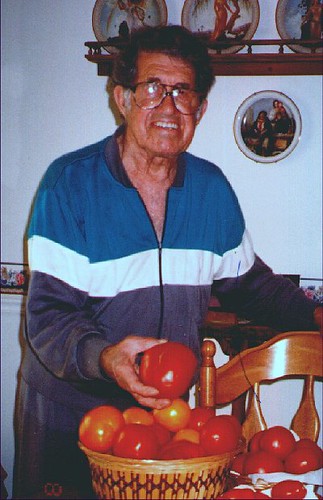
Grandad loved his gardenAmong my earliest memories is the ride from my childhood home in Georgia to the mountains of Virginia. The grass was greener, the sky was bluer, the water was clearer and even the bricks of the town's houses were a different shade of red.

I remember that Granddad cooked the best pork ribs on Earth. I remember wishing that when I got old enough to cook, Granddad would give me the recipe that he teasingly claimed was a secret when I was a boy.

I remember that even in those rare moments when Harlan Walls actually was too busy for me (or someone else) as a child, he took pains to be sure that he never seemed too busy.

And I remember that few people ever left Granddad with anything but a smile.

That strength of character, that graciousness in dealing with people and what always seemed to me to be an ability to do anything he wanted to, and do it well -- those things come close to summing up why Granddad was the greatest man I ever knew, but they are still not a sufficient explanation. And that truth is that some of the man's greatness defies explanation...

Death takes all...

When the funeral arrangements for Granddad began to be finalized, the idea of reading a poem was suggested. Dylan Thomas immediate leapt to mind:

Do not go gentle into that good night,
Old age should burn and rave at break of day;
Rage, rage against the dying of the light.


But Granddad had specifically requested that another poem be read - a poem with almost the opposite message. The poem he asked for, only a day before his death, was William Cullen Bryant's Thanatopsis.

Dylan Thomas's poem is about a common experience: we all lose people we love. Thomas was writing about his experience watching his own father die. Do Not Go Gentle Into That Good Night is the poem for anyone who has been the cheerleader, watching someone else die.

Thanatopsis is about a rarer experience. It is a poem about facing personally the arrival of the appointed hour of death. The poem acknowledges that everyone dies, and suggests that we have a choice: we can go to the grave like a slave being beaten into submission; or we can go to the grave with grace and dignity, as if we are simply moving to a new home.

Making fruitcake...Few people get the chance to actually face death. We see death take others much more often than we see it coming for us. Granddad was afforded that privilege. Cancer tested my Granddad's character and personality and had little impact on him. At the age of 84, after being told he had a tumor in his lung that would probably kill him, he continued to mow his own grass, worry about his tomatoes and speak at college dinners.

And when the time came, Granddad faced death, and embraced it almost at will. When his life seemed spent and living made no more sense, he stopped living - before anyone really expected it.

May God grant that I do as well - both in death and in life...