Friday, August 17, 2007

Why Special Education Labels Matter

Does it matter how your child is classified as a special education student? I mean, after all, Special Ed is SPECIAL ED: right?

I subscribe to a number of email lists on various topics related to education and twice now in the last few months the question of labels and why they matter has come up on one of these email lists.

The most recent occasion was a posting on a mailing list dedicated to special education law. A parent emailed the list to say that now, at the age of 12 and after over seven years as a special education student, her child had been diagnosed with Aspergers Syndrome, a communication disorder that falls under the umbrella of Autism Spectrum Disorder (ASD). The child had previously been diagnosed with some disorders that led to a special education label of emotionally disturbed. And the parent wanted to know why it mattered and whether she should push to have the classification changed.

One of the people who replied to her email was Carol Moore, a school psychologist in Oregon. I liked her answers (they were more thorough and systematic than my own) and, with her permission, I've quoted them here for my readers:

  1. The "right" classification is the accurate one. One person mentioned that the child had a chromosomal disorder that causes low cognition, motor difficulties, speech language, etc. In that case, the most appropriate classification would be Mental Retardation, since language difficulties are subsumed under that label, as would be behavioral difficulties, etc. The motor issues would still be addressed in the IEP, but that is not the primary factor affecting the student's educational performance. Other examples: a kiddo has a head injury and subsequent learning and behavior difficulty. The appropriate classification is TBI, not Mental Retardation, Emotional Disturbance, or Learning Disability; another child has a variety of medical diagnoses...let's say, ADHD, Bipolar, Tourettes, etc. The appropriate classification is Other Health Impaired.

  2. Too often parents and other team members would prefer to use a more palatable category, say Developmentally Delayed, when the child is clearly Mentally Retarded, to give a common example. This hurts the family by raising the expectation that the child may develop out of her difficulties, reducing community services and supports that may be available, and perhaps leading to school based services that are less appropriate.

  3. Categorical eligibility has an educational benefit...staff must learn about the conditions that give rise to an OHI or Autism eligibility, for example, whereas an Emotionally Disturbed or Learning Disabled student may be considered "someone else's problem," specifically, the SPED staff's vs. the regular education teacher's.

  4. Dollars flow through special education eligibilities via formulas that are established by the state. In my state, for example, the category of Traumatic Brain Injury is finally being added to the low incidence regional disability services, opening up the possibility of additional resources being available to students in that category. This is what happened with Autism spectrum disorder...parents advocated and the disorder became recognized and resources flowed.

  5. Finally, it is possible to have multiple eligibilities, if they all make sense. Some disorders "trump" or subsume others. For example, an Autistic student should not have an ED label UNLESS the emotional (and not typical behavioral manifestations of autism) component is significantly interfering and not automatically a part of the autism...perhaps depression. A child with an OHI eligibility due to ADHD should not also be labeled ED for the same reason...behavioral difficulties are part of the ADHD. Again, if something rather different were presented, say, substantial depression or anxiety, then addition of ED may be warranted.
Note: the ellipses were part of Moore's remarks and do not indicate that something has been deleted...

Moore concluded with a remark I had to smile at: "If you're now confused by all this, take heart: so are all the teams I've worked with. The primary thing to bear in mind is to accurately portray the student's difficulties."

The discussion took place on the Reed Martin Special Ed Law mailing list.

Special education labels DO matter for other reasons, too. A label/placement can determine what teacher a child sees. Different special education teachers may have different certifications.

In the not too distant past I was involved in a discussion on an email list on Down Syndrome. Let me say at the start that it is a great mailing list. If you are interested in issues related to Down Syndrome, the Down Syndrome List is the place, and I highly recommend them.

That said, the discussion I'm referring to lasted a week or more and shifted between a couple of focus points, depending on who was contributing at the moment and what their exact interests were. The focuses included:

The role of IQ (and, probably more importantly, IQ testing) in determining the eligibility category of a special education student.
The importance of inclusion for mentally impaired students (something the people on the list placed a higher value on than most special education parents)
And a classification distinction my particular state makes between students who are mildly mentally impaired and those who are moderately mentally impaired.
The discussion was animated. With several people replying to several people as they checked their email, it was sometimes like being at a table where everyone was talking at once. And, to be honest, I'm not an average member of the list; I'm a teacher, while most members of the list are caregivers for a child or adult with Down Syndrome.

At times in this particular discussion I felt like I got slapped around a little. (But, like I said, it's a good list and, hey, that's okay.)

The question of the validity of IQ tests -- what they really measure and to what extent they accurately gauge intelligence -- I leave for some other day (like when I do my doctorate, or something). But, like it or not, IQ ("general intellectual functioning," in the words of the policy) is specifically used in my state's policy to determine whether a student is mentally impaired. To be classified as mentally impaired, the student has to have an IQ of less than about 70. My state goes on, following the American Medical Association's model, and classifies mentally impaired students into sub-classes for eligibility purposes:
  • Mildly Mentally Impaired if their IQ falls between about 55 and about 70
  • Moderately Mentally Impaired if their IQ falls between about 40 and about 55
  • Severely Mentally Impaired if their IQ falls between about 25 and about 40
  • Profoundly Mentally Impaired if their IQ is less than about 25
"About" is an important word. The Wechsler Adult Intelligence Scale uses slightly different numbers.

But why does it matter whether a student is classified as moderately mentally impaired or mildly mentally impaired? Because teachers get certified to work with mildly mentally impaired students or they get certified to work with moderately mentally impaired students, etc. That means that if a student is classified as moderately mentally impaired (as Down Syndrome students often are) they become the educational responsibility of someone certified in working with moderately mentally impaired students -- and in my county we don't have someone with that certification at every school.

It's possible to be certified in more than one area of mentally impaired; but I don't know anyone who is (and the academic work involved would be considerable). And if an eligibility committee decides that Johnny is moderately mentally impaired instead of mildly mentally impaired, that may ultimately affect which school Johnny attends, what his program of study looks like, whether he is required to take the same high stakes test that most of the school's students take, etc. At the very least it would mean that the student would have to attend school somewhere in the county where a teacher certified to work with moderately mentally impaired students was available - and there's no teacher like that at my school!

Why doesn't my county place a teacher certified in teaching the moderately mentally impaired at every school? They don't exist. We don't have that many teachers certified in teaching the moderately mentally impaired. There's a shortage. Just like there's a shortage in my area of math and science teachers for the middle and high school grades.

At one point some of the participants in the discussion drew the conclusion that we segregated moderately mentally impaired students in my county. Of course, that's not the case (it would be a gross violation of the student's civil rights). And while a moderately mentally impaired student that lived near my school might have to take the bus to a different elementary school so that someone properly certified would be around to be responsible for their educational experience, that school would be a perfectly normal elementary school. But I don't think some of the people in the discussion ever bought that. And, as I said above, Down Syndrome parents seem to place a higher value than most special education parents on seeing their children taught in an environment where they are with their non-disabled peers...

But as you can see, whether a child is classified as moderately mentally impaired or mildly mentally impaired could possible make a big difference in their educational experience. Labels do matter.


Saturday, August 11, 2007

Carino's Italian Grill or Olive Garden?

Over the course of the summer Cheryl and I have eaten at five times - in The Olive Garden in Charleston, WV, Greensborro, NC, Florence, SC, Augusta, GA, and Seiverville, TN. We'd seen ads on television recently for Carino's Italian Grill and decided to compare the two on a recent trip to East Tennessee.

On Monday, August 6, we ate at the Olive Garden in Sevierville. On Thursday we ate at Johnny Carino's a couple of miles away in Pigeon Forge. I had Venetian Apricot Chicken at the Olive Garden and lemon Rosemary Chicken at Carino's.

The most immediate contrasts between the two restaurants as I entered Johnny Carino's had to do with space and decor. Olive Garden restaurants are partitioned into rooms that hold a dozen or so tables; Carino's was one large open space. While Olive Garden color schemes may vary from room to room, they are generally light colors in moderate lighting. Carino's was a mix of black and brown earth tones in low lighting.

The acoustics struck me as radically different. Carino's employees an open kitchen concept so that you can see the chef's working. Unfortunately, the cleaning area can also be heard in the dining room. While there was a nice sort of jazz or big band music background at Carino's, the dominate sound was dishes being washed. And being in one large room made the audio environment seem like a high school cafeteria. The Olive Garden's system or dividing the restaurant up into rooms makes conversation across a table much easier, cuts distractions a great deal, and make their music enjoyable. The darker color scheme made Carino's seem a little oppressive to me.

Whether it is a regular occurrence or just the luck of the draw, our waitress at Carino's was a novice. She was polite and well-meaning; but she told us that it was her first day on the job and she fumbled with everything she touched. Politeness and smiles aside, I don't remember ever having had wait staff at the Olive Garden seem so insecure and it made me wonder about the difference in training between the two restaurants.

Perhaps it was the waitress's inexperience, but it seemed to me like we were being asked to hurry at Carino's. The restaurant was full, people were waiting, and their solution was to ask us to eat quicker. It wasn't that blunt. But I'd had my food about seven minutes when the waitress asked if I wanted a box.

The Olive Garden wasn't perfect. We had a child with us and the child's food (a small pizza) didn't come as ordered. As a teacher I was offended on behalf of the child; but the little girl didn't know the difference...

The crux of the matter, though, is the food I suppose. At both restaurants the chicken was, well, exquisite. The flavor of the apricot chicken at the Olive Garden was surprisingly pleasant; I was amazed at how fresh and entertaining the grill lemon rosemary chicken at Carino's was.

For some reason the Olive Garden's menu often doesn’t include both a starch and a vegetable on the same plate as the entree. Salad, breadstick (which are excellent), and a meat with just veggies... The asparagus with my apricot chicken at the Olive Garden was young and tender; the broccoli was tough and reminded me of chewing corduroy from an old pair of pants that had dry rot. They should replace the broccoli with Tuscan potatoes in my opinion.

At Carino's I got angel hair pasta with my chicken. It was done perfectly in a perfect sauce. The green beans were the sort of warm-and-crisp texture I enjoy (my wife thinks they should be cook another hour). And the addition of a little spinach, some diced tomatoes, and a slice of lemon added color to the plate.

Conclusions:
  • The Olive Garden makes much better salad than Carino's
  • The Olive Garden's breadsticks are more enjoyable that the loaf of crusty bread Carino's brings to the table
  • The atmosphere at Olive Garden is much more pleasant
  • The Olive Garden has a larger menu to choose from
  • The two restaurants have about the same pricing scale
  • The Olive Garden has a better trained wait staff
  • The entrees at both restaurants are excellent
In the absence of an Olive Garden, I'd gladly eat at a Carino's. But when their commercials poke fun at the Olive Garden and present Carino's as "Not your garden variety Italian restaurant" their words come back to haunt them....

Sunday, August 5, 2007

Special Education Vocab: FAPE

The law says that your school system is obligated to provide a student with disabilities with a FAPE – a free appropriate public education. Do you know what that MEANS?

Technical jargon can get in the way of understanding your child's rights.

What is a FAPE? The long list of technical terms in special education can be daunting to some parents. And since FAPE is one of the most basic terms, I thought I'd take a little time here to make sure you could find a clear, concise definition...

meThe Special Education Lawyers website has one of the best explanations of the term FAPE that I've come across on the Internet. Their page looks at each word individually and talks briefly about what it means for an education to be free, what it means for it to be appropriate, etc.

The concept of a FAPE comes from a court ruling in 1971. In the case Pennsylvania Association for Retarded Children v. the Commonwealth of Pennsylvania, a federal judge ruled that retarded children had a right to a free public education under the "equal protection" clause of the Fourteenth Amendment of the Constitution. The case affected students in Pennsylvania. But the next year a case in the District of Columbia, Mills v. the Board of Education, made the concept of FAPE binding on all schools in the U.S.

To catch up with the courts, Congress passed a number of laws over the next few years. Section 504 of the Rehabilitation Act of 1973, along with the Education for All Handicapped Children Act (EAHCA) in 1975 were the most important. EAHCA was reauthorized in 1990 as the Individuals with Disabilities Education Act (IDEA).

The concepts involved in FAPE are fairly straightforward. Education should be free - from transportation back and forth to school to the cost of textbooks, if it is essential to education it should not cost the student (or the student's guardians) anything. Education should be appropriate; this idea is harder to define and is usually the point of contention when disagreement occurs between a child's family and a school system. And education should be offered by a public agency (a government run school system).

What is (and is not) appropriate is a changing concept because education is a growing academic field and because values change with time.
  • Fifty years ago, for example, sex education would probably not have been considered appropriate for many students; but our values have changed.
  • Twenty-five years ago it might have been consider appropriate to "guide" students with disabilities into academic paths or tracks that focused on trade skills like auto mechanics; but changes in our values and in the economy have broadened the academic and career choices for many disabled students.
  • And advances in our understanding of how children learn regularly require that we re-evaluate the methods we use to teach all children.
What is appropriate changes with time. But all students with disabilities in America have a right to a free appropriate public education - FAPE.

Wednesday, August 1, 2007

Could You Vote for Hillary?

Eight years ago (give or take a few months) people started asking me if I could vote for Al Gore. It usually wasn't really a question - it was more of an accusation. They'd tell me that Gore was arrogant and over-educated (I always wondered what was wrong with being over-educated). They'd tell me Gore was stupid, that he thought he'd invented the Internet (which, obviously, he hadn't), and that Al made fun of Oliver North at a 1987 Senate hearing where North told Congress that one day Osama Bin Laden was going to be a problem (You remember that email? The truth is that Gore wasn't on the committee and never questioned North). Then they'd tell me something like that Bush had better judgment and would make a good president - and they'd finish with something about how a Bush presidency would be good for public education in America....


Four years ago those same people started asking me if I could vote for John Kerry. And, again, it usually sounded more like an accusation than a question. They'd tell me that Kerry was a hypocrite because he only threw cheap ribbons that can be replaced anyway instead of real medals at whatever that protest event was. They'd tell me Kerry didn't really earn those three purple hearts, anyway, and that they knew he didn't because Swift Boat Veterans for Truth said he didn't (and we all knew they were a disinterested party speaking on behalf of God and justice). And they'd tell that Kerry was really just a pansy who owed most of what he'd accomplished in life to money he got from his wife with the funny accent. Then they'd tell me that it was unpatriotic to vote against Bush in the middle of a war (even if he started it)....

Now those same people have started asking me if I could vote for Hillary. And it sounds like an accusation again.

I voted for Kerry. I think I voted for Gore, but that was a long time ago and I'm not absolutely positive.

When the Democratic Primary comes around in my state, I'll probably vote for John Edwards. For reasons I can't really quantify, reasons that have as much to do with personality as with politics, I don't really like Hillary all that much. But on November 4th, 2008, if the choice comes down to Hillary Clinton or Fred Thompson, or maybe Hillary vs. Newt Gingrich, I will not stay home and curl up in bed and pull the covers over my head.

The Republicans have spent eight years trying to privatize public education and take America backwards in time to before it was a Great Society. They started an expensive war to satisfy personal agendas. And when it's all said and done I'll go out on November 4th next year and vote for whomever I think is most likely to clean up the mess that George W. Bush and the GOP have made of America. And I'll do it at least in part because it's my patriotic duty.

The answer, then, is "yes." I'll almost certainly vote for someone else when Virginia holds its Democratic Presidential Primary on February 12th. But if it comes to that, I could vote for Hillary on November 4th next year. Quickly, and without much reservation...

Tuesday, July 31, 2007

Shopping Online: You Need a Good Shopping Cart...

There's nothing like getting a bad shopping cart when you go to the grocery store. Last week I went shopping and the card I got had a back wheel that didn't turn and front wheels that made the cart want to veer left. On top of that, it squeaked.

When you shop online your cart usually doesn't squeak. But whether your experience as a shopper is good or bad depends in part on whether your shopping cart is any good. If you want to sell stuff online and have customers that enjoy shopping with you, you need a good shopping cart.

Ashop Commerce makes a pretty good shopping cart. The company is a leading provider of hosted shopping cart software. It offers a complete solution for merchants to sell online. And its website says that it offers online businesses a 10 day trial period to test some of its software.

There's nothing like getting to the end of an online shopping spree and discovering that your digital shopping cart can't remember what you wanted to buy. So if you're looking for shopping cart software, visit Ashop's site. Their shopping carts seem to be some of the best available...

Note: In the interest of full disclosure, I should mention that I was financially compensated for this post...

Sunday, July 29, 2007

The Cosner Home...

My wife's Dad still lives in the house where she spent most of her childhood in the small community of Red House, Md. The house itself is a beautiful two-storey home with a large basement. Much of the house is trimmed in wormy American chestnut.


The most beautiful part of the home, though, is arguably the yard. The Cosner home is surrounded by flowers - front and back. And as you walkout the back door you are standing in the shadow of a stand of large trees, mostly oaks, that shelter the house from the harsh winter winds of this part of the Allegheny Plateau.


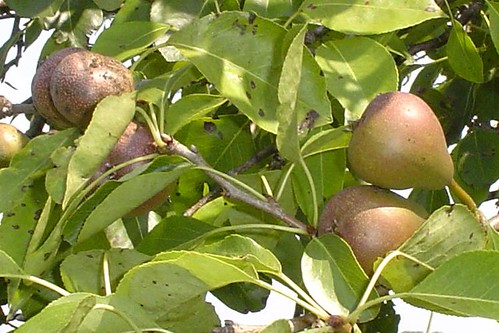
The house sits on the east end of the woods. On the west end of the woods is Benny's garden and his orchard. Potatoes, corn, squash, strawberries, blueberries, currants, cabbage, onions, a few sunflowers, pears and apples grow in the field west of the woods.


You can see pictures of all the flowers, ferns, etc. in the Cosner yard here.

I also have pictures of the garden and some shots taken in the woods online...

Saturday, July 28, 2007

Naïve and Irresponsible...

Barack Obama said Monday during the Democratic debate that he would meet during his first year in office with the leaders of Cuba, Syria, Venezuela, Iran, North Korea, and maybe a few other governments that I'm forgetting - governments whose leaders despise America, whose leaders may even sponsor terrorism. Obama tried to set up that proposed course of action as a contract to the failed foreign policies of President George W. Bush.

The press exploded with criticism of Obama for his statements. Hillary Clinton called the idea "naïve and irresponsible." And Clinton's criticism of Obama has changed the tone of the campaign.

Is Obama's proposal naïve and irresponsible? I'd say yes. And the contrast he's trying to set up doesn't work.

President Bush has had most of seven years now to come to terms with the rouge states of the world. It is no shame that he didn't have Kim Il Sung to dinner in 1991. But Bush's foreign policy in general has been characterized by stubborn refusal to ever change direction - a "don't confuse me with the facts" approach that says "we started out in this direction and if we keep going this direction we'll eventually get somewhere."

Hillary says that she doesn't want to be used for propaganda purposes. Those governments will make propaganda anyway. They will tell their people and their allies what they want, regardless of truth.

There is groundwork that has to be laid, though. And the idea that heads of state can meet on short notice without laying the groundwork for some sort of accomplishment is, well, naïve and irresponsible. Would it better than the reckless and stubborn policies of the Bush administration? Yes. It might even accidentally accomplish something; but any accomplishment would be largely accidental.

If Obama had said that he hoped to meet with such leaders in his first term, after laying the groundwork for some constructive dialogue, then the contrast would have worked.

Obama's mistake? He's in too much of a hurry. But changing course and entering into dialogue (even with North Korea's Kim Il Sung or Iran's Mahmoud Ahmadinejad) doesn't give away anything when the current course is not working.

A Trip to Dolly Sods, WV

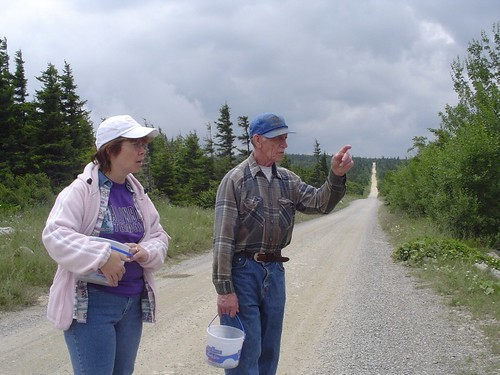
On Wednesday (July 25), Cheryl and I went with her Dad (Benny) to one of his old stomping grounds, the Dolly Sods.

Benny looking for huckleberriesThe ridgeline road that runs through the Dolly Sods Wilderness Area crosses back and forth between Tucker County and Grant County, West Virginia. It sits at just under 4000 feet above sea level on the wind-swept plains on the Allegheny Plateau.

We arrived at Bear Rocks (3,954 feet) from the north by taking Jordon Run to Public Road 75 (PR75). We parked at the top of the hairpin turn, where Bear Rocks Trail starts. From there we walked southeast and looked for berries in the open space along the edge of the ridge there.

A huge variety of berries grow on the high plains of Dolly Sods. Locally, they get grouped together under the label "huckleberries." Among the berries that grow there: wild blueberries, chokeberries, black huckleberries, gooseberries, teaberries, and wild cranberries. I'm not a berry expert by any means, but my guess is the ripe berries we picked were a mix of black huckleberries and wild blueberries.

Cheryl and Benny crossing PR75The area where we first picked, southeast of PR75, ran along a steep slope that drops over 1000 feet in places down to Jordon Run. I suspect that we were above 4,000 feet for much of the 90 minutes or so that we picked berries on that side of PR75. The brush on that side of the road was high, perhaps knee deep in most places. The ground was sprinkled with large rocks. Walking was tedious because it was hard to see your feet, but there were no briars or thistles.

The yield on the southeast side of PR75 was disappointing. But the scenery was beautiful. We eventually crossed back over to the western side of PR75. Berries were thicker there and the brush was not quite as deep. In all we gathered about a gallon of berries between the three of us.

View from Bear Rocks area, looking eastOn the 25th of July, it was 62F degrees at noon at Bear Rocks when we parked and got out. The sky was overcast and a light drizzle eventually started. When we stopped picking berries it was down to 56F degrees. That was 3:30 in the afternoon...

We took the scenic route back home. We drove south on PR75 to where it hits PR19. There we went south and west to Lanesville. We took 32 past Canaan Valley and came home through Thomas.

The area is one of Appalachia's most beautiful places...

Monday, July 23, 2007

The New Dog...

We have a new dog.

I guess like everything else in life, the way we find a dog has been changed forever by the Internet. So we looked at dogs online at the websites of various animal shelters and humane societies in our general area.

The experience was frustrating and a little disheartening. We discovered that many of the organizations didn't update their listings often enough. We'd
  • Find a dog we were interested in

  • Email the group

  • Receive an email back that had been automatically generated and had an application form attached

  • And fill out the form and send it in

Three or four days later we'd get an email asking for some other information, or telling us the dog had already been adopted, or telling us that the dog had been moved to some other shelter/organization for reasons that were never made clear.

The worst locations had websites so out of date that they included contact phone numbers for volunteers who no longer worked for the shelter or humane society.

Our new dog, Wild ThangWe dealt with one county humane society where a woman told us they had the dog we'd seen online and that we could apply for it, but the animal might be shipped on to another adoption agency even if we wanted it. We found that confusing and, frankly, insulting. The same agency had a person who kept telling us that we couldn't expect better communication or service considering that she was really just a volunteer. When being a volunteer becomes an excuse for shoddy work or unprofessional behavior, in my mind it's time to stop volunteering....

In the couple of months that we spent looking for our new pet, we went inside five or six animal shelters and a couple of pet stores. Most, sadly, were run down concrete structures that smelled of dog piss, hidden on a back road.

We found our new pet online. The shelter, in Greeneville, Tennessee, had a phone number (not just an email address). We contacted them on July 18 and asked a few questions, then made the 120-mile trip down to see our new pet and decided to take her. The shelter had indoor/outdoor lots with chain link fence, a manicured lawn and picnic area, and a nice office. The people were warm and friendly.

Her name when she came to the Greene County Humane Society was Macy. She answers to that, but I call her Wild Thang most of the time.

One of the biggest advantages of the shelter in Greenville was that Macy had already been spade and had her shots. All we had to do was reimburse those costs and then take our new pet. Many of the shelters don't carry out those procedures until after someone adopts the pet, and that creates a waiting period and a requirement that the new owner make the trip to the shelter twice.

So far we really enjoy Macy. More about her later...

Saturday, July 21, 2007

A Philosophy of Education IV (The Roles of Students and Teachers in the Classroom)

What is the place of students? What is the role of teachers? The questions are reciprocal in the sense that you must have students in order to be a teacher.

Students should be active participants in the learning process. I believe in cooperative learning, in a process where students learn together. And I believe in participatory learning. Education, especially in the early grades, is not about knowledge - facts and figures, dates and names. It is about skills. Students learn the three R's mostly through exercising, practicing particular skills. You don't tell someone how to read. You introduce them to the process and allow them to practice it in ways that build strength in it.

meTeachers should be expert guides, not bosses or masters. The rigidity of the relationship and the formality of the two roles, student and teacher, will vary from subject area to subject area and from grade to grade. The idea that we can make generalizations about kindergarten classroom relationships that will still hold true in the tenth grade is probably a naive desire to oversimplify theory and philosophy.

If I must generalize about teaching situations in a subjunctive mode, I'd prefer a student-centered classroom where the teacher aids in the discovery process (not in construction of "reality," since reality is already here and is pretty real without the help of my students) and where the teacher acts as a coach in the development of skills. I'd prefer a classroom where the students felt as few restrictions as possible within the requirements of the learning process. And I'd prefer a classroom where learning, not teaching, was the central focus.

The higher the student-teacher ratio, the less like this a classroom becomes. And in my mind the single biggest factor in the quality of education and the success of the educational process is the most expensive factor - personnel. We can tinker with curriculum. We can alter pedagogy. We can think of new ways to measure success (and accountability). We can require that the one teacher we have (in a room where two are needed) be better trained. But the solution that is most likely to work is the solution that no one wants to pay for: more teachers per school.